Electrolysis Hair Removal
Permanent Hair Removal with Electrolysis
Electrolysis offers a precise, permanent approach to unwanted hair removal, including blonde, red, grey and white hairs that cannot be effectively treated with laser.
At Oasis Wellbeing Clinic in Poulton-le-Fylde, we use professional electrolysis technology to treat individual hair follicles, making it particularly suitable for smaller areas, persistent facial hair and remaining hairs following laser hair removal.
Unlike laser treatment, electrolysis does not rely on hair pigmentation and can be used across different hair colours and skin tones.
Whether you’re concerned about a few unwanted facial hairs, hormonally influenced hair growth or persistent hairs that have not responded to other methods, your treatment is tailored to your individual needs.
Our focus is on effective, carefully planned hair removal in a welcoming, discreet and inclusive environment.
Quick Questions
Electrolysis Hair Removal
What:
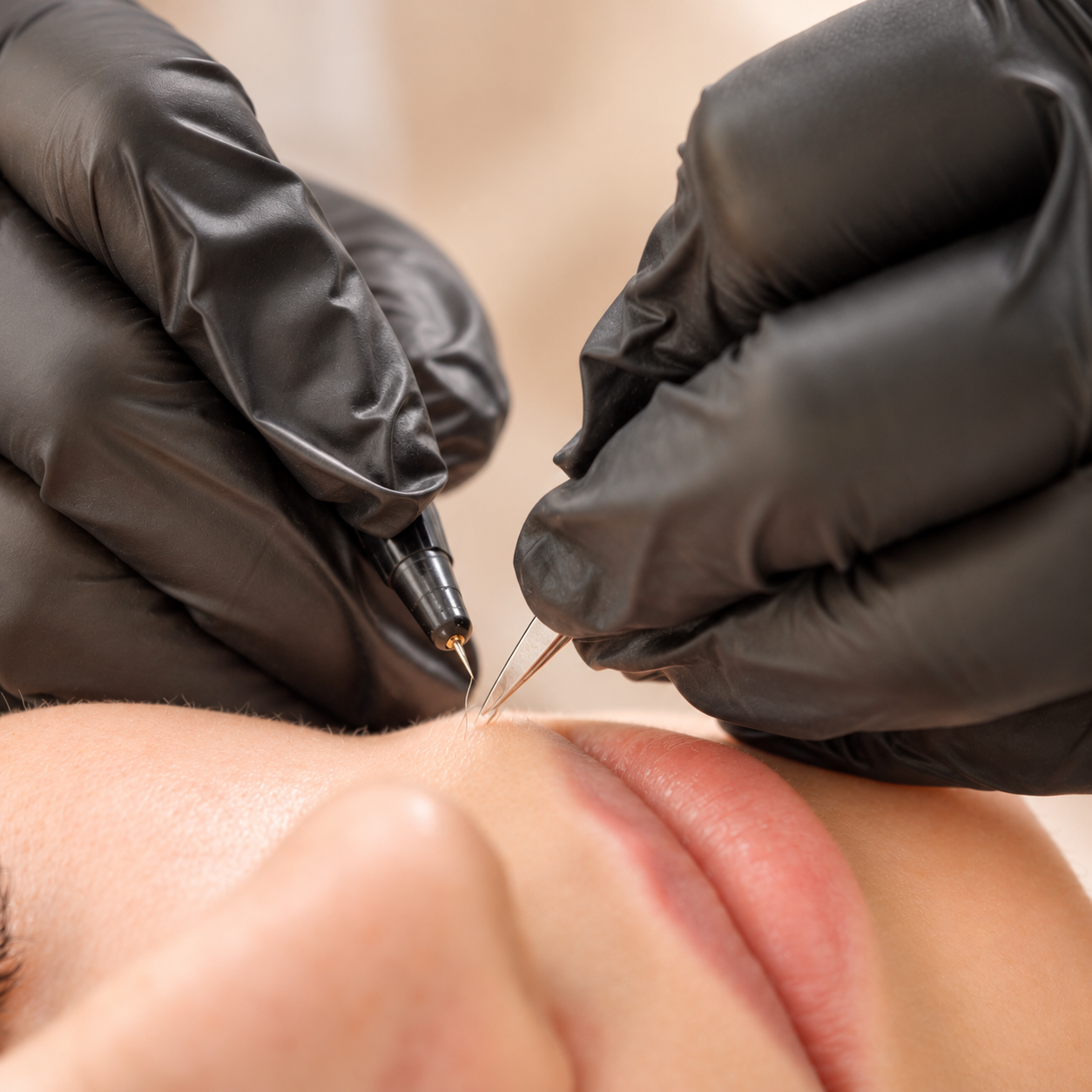
A method of permanent hair removal that uses a fine sterile probe and controlled electrical energy to treat individual hair follicles.
Treatment Time:
Appointments are available in 15, 30, 45 and 60-minute sessions, depending on the treatment area and amount of hair requiring removal.
Immediately After:
Mild redness, warmth and small areas of swelling around the treated follicles are common.
Recovery:
Most clients can return to normal daily activities immediately. Temporary redness, swelling or small crusts may occur while the skin heals.
Recommended Course:
Multiple appointments are required because hairs grow in different cycles. Treatment may continue over many months or longer, particularly for dense or hormonally influenced hair growth.
Consultation:
An initial consultation is recommended to assess your hair growth, medical history and suitability, and discuss the expected treatment commitment.
Location:
Oasis Wellbeing Clinic, Poulton-le-Fylde, Lancashire.
What Can Electrolysis Hair Removal Help With?
Electrolysis provides a precise approach to permanent hair removal, particularly where laser treatment may be unsuitable or where smaller areas require individual hair treatment.
Your consultation will help determine whether electrolysis, laser hair removal or a combination of approaches is most appropriate for your hair growth and treatment goals.
Blonde, Grey, White & Red Hair
A suitable option for hairs that contain too little pigment to respond effectively to laser hair removal.
Unwanted Facial Hair
Can treat individual hairs on areas such as the upper lip, chin, jawline, cheeks and neck.
Hormonally Influenced Hair Growth
May help manage unwanted hair associated with hormonal changes, including PCOS and menopause. Ongoing hormonal influences can cause additional follicles to produce new hairs.
Persistent Hair After Laser
An effective option for treating remaining hairs after a course of laser hair reduction, particularly finer or lighter hairs.
Small & Delicate Areas
Allows individual hairs to be treated precisely, including selected areas around the eyebrows where appropriate.
Unwanted Body Hair
Can be used on suitable body areas, including smaller patches of unwanted hair. Larger areas may require longer treatment programmes.
How Does Electrolysis Hair Removal Work?
Precise Treatment of Individual Hair Follicles
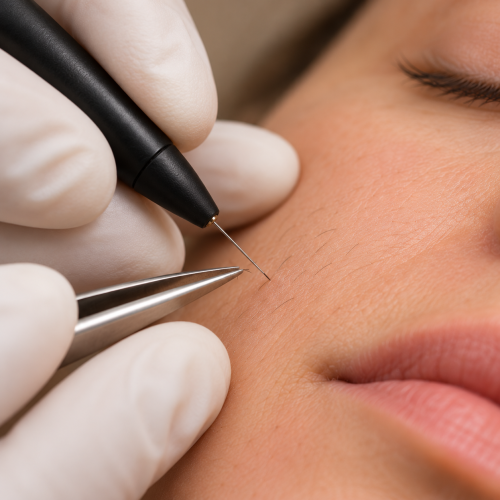
Electrolysis works by introducing a very fine sterile probe into the natural opening of an individual hair follicle.
Controlled electrical energy is delivered to the follicle to damage the structures responsible for producing hair. The treated hair is then gently removed.
Unlike laser hair removal, electrolysis does not depend on pigment within the hair, making it an option for all natural hair colours.
Because individual hairs grow at different times and successful follicle destruction may require repeated treatment, a series of appointments is needed to achieve progressive, permanent hair removal.
At Oasis, your treatment is planned according to your hair density, treatment area, skin condition and individual response.
What Happens During Electrolysis Hair Removal?
01
Your Consultation
We’ll assess your hair growth, review your medical history and explain the treatment process, suitability and expected number of appointments.
02
Your Treatment
A fine sterile probe is introduced into individual hair follicles and controlled electrical energy is applied. Treated hairs are then gently removed.
03
Immediately Afterwards
Temporary redness, swelling or sensitivity may occur. We’ll explain how to care for your skin and what to avoid during the initial healing period.
04
Your Personalised Programme
Regular appointments allow us to treat hairs as they become available for treatment. We’ll monitor your progress and adjust your appointment frequency as hair growth reduces.
Electrolysis Hair Removal Prices
Appointment duration is selected according to the treatment area and amount of hair requiring removal. Your overall treatment plan and costs will be discussed during consultation.
15 Minutes
£30
30 Minutes
£40
45 Minutes
£55
60 Minutes
£70
Electrolysis Hair Removal FAQs
Is Electrolysis Hair Removal Permanent?
Yes. Electrolysis is an established method of permanent hair removal.
It uses controlled electrical energy to treat individual hair follicles, damaging the structures responsible for hair production.
Once a follicle has been successfully destroyed, it can no longer produce hair. However, some follicles may require more than one treatment, and untreated follicles can continue to produce new hairs.
A course of appointments is needed to achieve progressive, permanent hair removal.
How Many Electrolysis Treatments Will I Need?
The number of treatments varies considerably from person to person.
Factors include the number of hairs, their thickness, the treatment area, hormonal influences, previous hair removal methods and how consistently appointments are maintained.
Small areas with only a few hairs may require relatively short appointments, while dense or hormonally influenced hair growth can require regular treatment over a year or longer.
We’ll assess your hair growth during consultation and explain the likely treatment commitment, although an exact number of appointments cannot be guaranteed.
How Often Will I Need Electrolysis?
Appointments are often more frequent at the beginning of a treatment programme, particularly where there is significant hair growth.
Weekly or fortnightly sessions may be appropriate for some clients, while others benefit from different intervals.
As the number of visible hairs decreases, appointments can usually become shorter or less frequent.
Your treatment schedule will be tailored to your hair growth, the area being treated and your individual progress.
What's the Difference Between Electrolysis and Laser Hair Removal?
Electrolysis and laser hair removal work differently.
Electrolysis treats individual hair follicles using controlled electrical energy. It does not rely on hair pigmentation and can provide permanent removal of successfully treated follicles.
Laser Hair Removal uses light energy absorbed by pigment within the hair. It is generally more practical for larger areas of suitable pigmented hair and provides long-term hair reduction.
At Oasis, we offer both approaches.
Laser may be more suitable for larger areas of dark hair, while electrolysis can be particularly useful for blonde, red, grey or white hair, smaller areas and remaining hairs following laser treatment.
Does Electrolysis Hair Removal Hurt?
Electrolysis can cause a brief sensation of heat, stinging or prickling as energy is delivered to each hair follicle.
Most clients find treatment manageable, although sensitivity varies according to the area being treated and individual pain tolerance.
We adjust the treatment according to your skin and comfort, and you can discuss any concerns during your consultation.
Some areas may feel more sensitive than others, particularly the upper lip.
How Should I Prepare for Electrolysis Hair Removal?
Before your appointment, allow enough hair growth for the treated hairs to be seen and gently removed with tweezers.
Avoid waxing, plucking, threading or epilating the treatment area beforehand, as these methods remove the hair from the follicle.
Keep your skin clean and avoid applying irritating skincare products to the treatment area immediately before your appointment.
Please tell us about relevant medications, medical conditions, allergies, recent skin treatments or active skin concerns.
We’ll provide any additional preparation instructions during your consultation.
Can I Shave Between Electrolysis Appointments?
Yes. Shaving or carefully trimming the hair between appointments is generally suitable.
Shaving cuts the hair at the skin’s surface without removing it from the follicle. It does not make hair grow back thicker or increase the number of follicles.
However, we need enough visible hair to identify and remove each treated hair during your appointment.
Avoid plucking, waxing, threading or epilating between treatments, as these methods can interfere with your electrolysis programme.
What Should I Expect After Electrolysis Hair Removal?
Temporary redness, warmth, tenderness and mild swelling around the treated follicles are common.
These effects often settle within a few hours to a couple of days, depending on your skin and the area treated.
Occasionally, tiny crusts or pinprick scabs may develop as the skin heals. These should be left to resolve naturally.
Most clients can return to normal daily activities immediately, although some temporary precautions are recommended.
We’ll explain what to expect and provide aftercare advice appropriate to your treatment.
What Aftercare Is Needed Following Electrolysis?
Good aftercare helps protect the treated follicles while the skin heals.
For the initial 24–48 hours, follow your individual aftercare instructions, which may include:
- Avoiding touching or picking the treated area
- Avoiding excessive heat, saunas and strenuous exercise
- Avoiding swimming and potentially irritating skincare products
- Keeping the skin clean and allowing any small crusts to heal naturally
- Protecting the treated area from direct sun exposure and using appropriate SPF
Avoid applying strong exfoliating acids or retinoids until the skin has recovered.
Contact the clinic if you develop unexpected or worsening symptoms.
Are There Any Risks or Side Effects from Electrolysis?
Electrolysis is generally well tolerated when performed appropriately, but all procedures that involve treating the skin carry some risk.
Common temporary effects include redness, swelling, tenderness and occasional small crusts.
Less common complications can include prolonged irritation, infection, changes in pigmentation or scarring.
Clients with a history of pigmentation changes, poor wound healing or certain skin conditions may require additional assessment.
We’ll discuss the relevant risks, expected recovery and appropriate aftercare before treatment.
Is Electrolysis Suitable for Everyone?
Electrolysis can be suitable for many different skin types and natural hair colours, but treatment is not appropriate for everyone.
Your medical history, medications, allergies, skin condition and any implanted medical devices must be considered before treatment.
Particular precautions may apply if you have a pacemaker or other implanted electronic device, a history of problematic scarring, certain bleeding or healing conditions, or an active infection in the treatment area.
Pregnancy and other individual circumstances may also affect treatment planning and insurance requirements.
We’ll assess suitability during consultation and recommend medical advice where necessary.
Can Electrolysis Permanently Remove Hair Caused by Hormonal Changes?
Electrolysis can permanently remove successfully treated hair follicles, including unwanted hair associated with hormonal changes.
However, conditions such as PCOS, menopause-related hormonal changes or hormone therapy may continue to stimulate new hair growth from previously untreated follicles.
This means additional appointments may be required over time, even when earlier treatments have been successful.
Electrolysis removes unwanted hair but does not treat the underlying hormonal condition.
We’ll assess your hair growth and explain realistic expectations during consultation. Where appropriate, we may also recommend medical assessment of unexplained or rapidly changing hair growth.
Which Areas Can Be Treated with Electrolysis?
Electrolysis can be used on many areas of the face and body.
Common treatment areas include the upper lip, chin, jawline, cheeks, neck, eyebrows, chest, abdomen and smaller patches of unwanted body hair.
It can also be useful for selected ingrown hairs and remaining hairs following laser treatment, provided the skin is suitable.
Some delicate areas require additional precautions, and we do not treat eyelashes or the inside of the nose or ears.
During consultation, we’ll assess the area and explain whether electrolysis is appropriate.
Ready To Achieve Permanent Hair Removal?
Whether you’re concerned about a few unwanted facial hairs, persistent hormonal hair growth or lighter hairs that haven’t responded to laser treatment, electrolysis may offer an effective long-term solution.
At Oasis Wellbeing Clinic, we take the time to understand your concerns and recommend an appropriate treatment plan.
Your consultation will include an assessment of your hair growth, treatment suitability and the likely commitment involved in achieving your goals.
Book your Electrolysis Hair Removal Consultation today.
Love the skin you’re in.
Our Commitment to
Respect
At Oasis Wellbeing Clinic, we understand that unwanted hair can be a sensitive and deeply personal concern.
We welcome clients of all genders, backgrounds and skin types, providing a discreet, inclusive environment where you can discuss your hair removal goals without judgement.
Whether your hair growth is influenced by hormones, a medical condition, gender transition or personal preference, we’ll provide respectful, individualised advice and realistic expectations.
Your comfort, privacy and confidence are important throughout every stage of treatment.